
MIDIA as a benchmark in digitalization: the experience of Alex Sistem company
For many SMEs, digitalization remains difficult to translate into concrete actions, even though it is clearly necessary. However, the experience of dozens of companies in the Republic of Moldova that have already undergone a digital intensity assessment using the MIDIA tool, developed by ACETI, shows that digital transformation can become a clear, structured process tailored to each business reality. One such example is Alex Sistem SRL, which, through MIDIA, gained a better understanding of its level of digital maturity and defined a coherent strategic direction. Without abandoning the values that shaped the company, the process helped turn digitalization intentions into concrete, well-targeted, and effective actions.
A competence-driven company facing the need for modernization
Alex Sistem SRL is the first private calibration laboratory in the Republic of Moldova, specializing in metrological verification of measuring instruments.
Before embarking on digitalization, the company faced challenges related to internal process organization. Many activities were handled manually or with limited automation, information was scattered, and digital traceability was limited, affecting operational efficiency and consuming time. The company lacked integrated systems such as ERP and CRM, making data management and customer relations more difficult.
At the same time, the company aimed to ensure that digitalization would not mean a break from the past, but rather a natural continuation—leveraging years of accumulated experience while offering clients faster, clearer, and better-organized services.
MIDIA – a clear starting point for digital transformation
The decision to take a concrete step toward digitalization came with the discovery of the MIDIA tool—a digital intensity assessment instrument developed by ACETI within the “Digital Maturity in Innovative Regions” project, implemented with the support of Switzerland and Helvetas Moldova through the OPTIM Project.
Inspired by European models used within digital innovation hubs, MIDIA provides companies with a structured analysis of their level of digitalization and concrete development recommendations.
Using this tool involved a thorough analysis of internal information: data was collected and clearly structured, enabling the team to gain a complete picture of both strengths and areas needing improvement.
“The main conclusion was that digitalization is not just about introducing new technologies, but also about better organization, integration, and traceability of information. What surprised us most was that the main challenge was not technical, but organizational. It was about how we work and how the team engages in change,” explains Alexei Pianîh, founder of the company.
From assessment to implementation
Based on MIDIA’s recommendations, the company began gradually implementing a series of concrete solutions to ensure proper team adaptation.
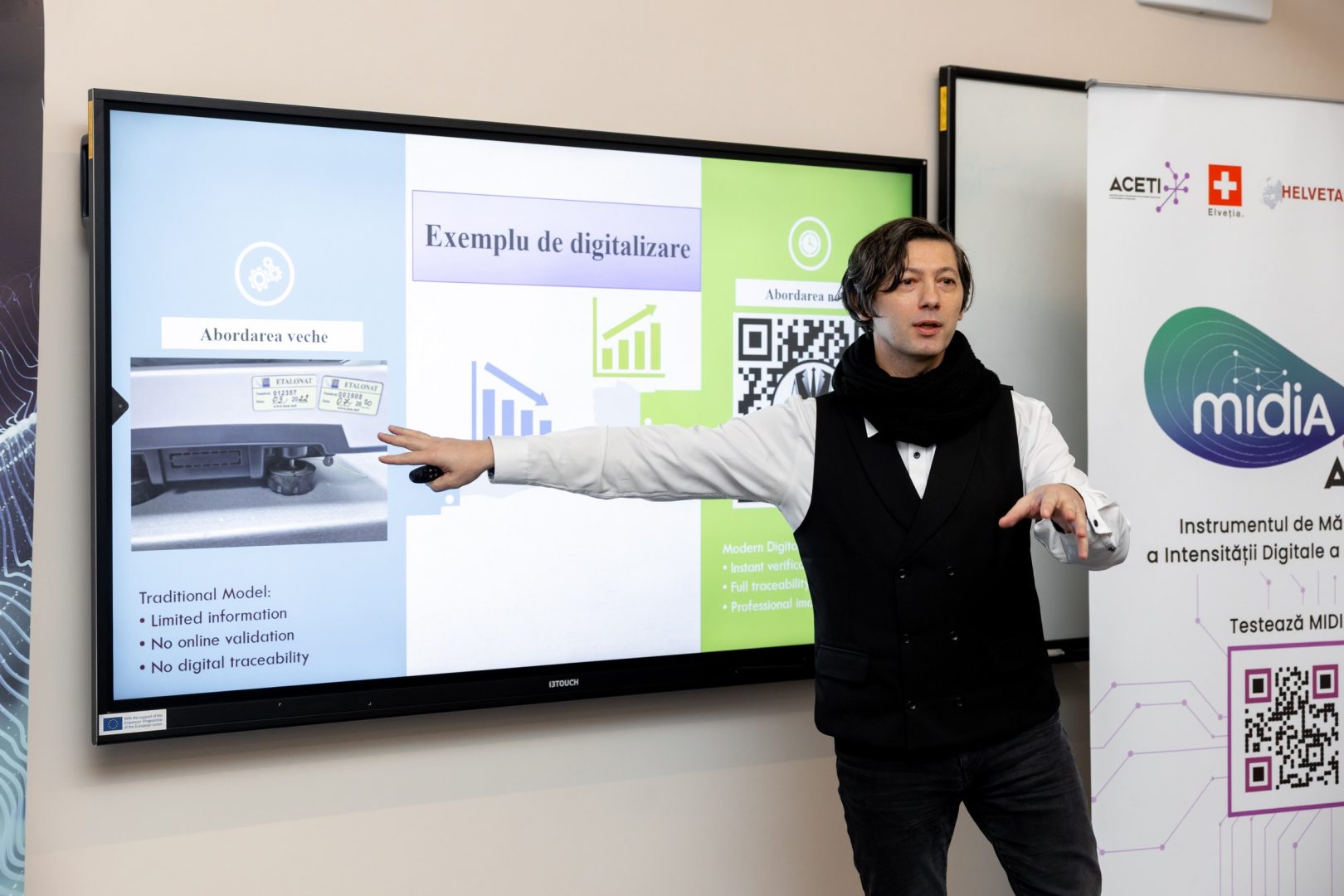
A first step was the introduction of electronic signatures, allowing documents to be transmitted digitally and significantly reducing processing time. At the same time, the company initiated the implementation of QR codes to improve data traceability, as well as the integration of ERP and CRM systems to centralize information and streamline operations.
As a result of these changes, document processing time decreased by 30–40%, and access to information became faster and clearer. Document digitalization reduced administrative costs, while ERP and CRM integration enables even more efficient data management.
The impact on customer relations has been equally significant: faster responses and easier access to information provide clients with a smoother, more professional, and trustworthy experience.
At the same time, applying MIDIA has increased the company’s credibility with financiers and partners.
“Through this assessment, our company gained a clear and structured view of its level of digitalization, which adds credibility in the eyes of financiers and partners. Essentially, MIDIA allows us to demonstrate that we are not just talking about intentions, but about a well-defined strategic direction,” says the founder of Alex Sistem.
Key takeaway: digitalization starts with clarity
The experience of Alex Sistem confirms a principle that is becoming increasingly relevant for SMEs: digitalization begins with an accurate understanding of internal realities.
“We realized that business development is not just about continuing what you already do well, but also about identifying where you can become more efficient. MIDIA gave us exactly this clarity—it helped us understand where we are, what needs improvement, and how to move forward without losing what defines us. It is a bridge between what we have built and what we want to become,” concludes Alexei Pianîh.
In a context where more and more SMEs are looking for ways to become competitive, such examples show that digital transformation should not be seen as a risk or a sudden change, but as a planned process tailored to real business needs—one that delivers concrete results while strengthening what already works well.
The “Digital Maturity in Innovative Regions” project is implemented with the support of Switzerland and Helvetas Moldova through the OPTIM Project.
